


If we want to understand what the Dharma teaches us about building affinity and living in harmony with others, we must first understand the four great all-embracing virtues. The Buddha teaches that for us to realize our true capacity of connecting with and serving our fellow citizens, we have to first build a good rapport, and the four virtues are tools to that end. The four Read more

We sometimes see signs on the highway warning: “Keep a safe distance.” Actually, it is not only in driving that we need to keep a distance. For safety reasons, any person and anything in the world needs to keep a distance.Take, for instance, the human body. Our eyes, nose, and mouth all need to keep a distance from one another. Our internal organs all have Read more

“True Dharma” means those teachings which are right, correct, and do not deviate from the Middle Way.The word “Dharma” has several different meanings. One meaningof “dharma” is “phenomena.” In this sense, “dharma” includes phenomena as large as the universe and as small as a mustard seed. “Dharma” also refers to the truth, the teachings of the Buddha. The Dharma the Buddha taught is what allows people Read more

Lessen desire and be without any wishes and the body and mind will be at ease.When our desires are balanced and reasonable, we can be content. The Buddha taught that deep wisdom can be found only by following a “middle way” between dualistic extremes. The middle way can always be found by contemplating which side of a dualistic pair is contending for our attention. If Read more
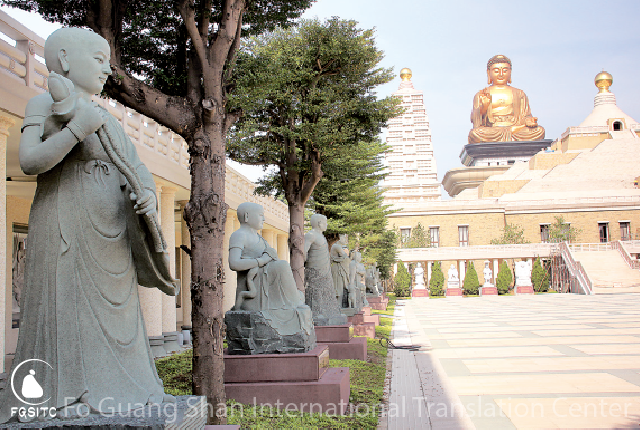
In devoting my life to Buddhism, in order to keep Buddhism current with the advances in society, in terms of thoughts, I am always making improvements at every hour and moment; in terms of practice, I am constantly and continuously making adjustments. Even though I know that Buddhism must be reformed, innovation never comes into being in the heat of the moment. My “silent revolution” Read more

Our emotions are a very important part of our everyday life, and they star in a leading role on the stage of relationships. The ability to feel and our freedom to act upon these feelings give us both joy and sorrow, and it is imperative that we maintain our emotional well-being to minimize the potential for suffering within relationships. Emotions are the glue that bind Read more

Humans are thinking animals! Since the beginning of time, there have always been people who fantasize, who have delusions, who dream—and many who have ideals. When we lie in our beds at night, we should be free from worry. Yet thoughts about our lives often arise then; thoughts about family, country, or even the world. Everything is within our minds.The average person often tends to Read more

Most people regard the Buddhist religion as conservative and passive. Many think that Buddhism only teaches people to meditate, recite mantras and be vegetarians. They do not associate the religion with active and progressive ideas such as environmental protection. In truth, Buddhism is a religion that embodies the spirit of environmental protection and it has a long history of being active in such matters, well Read more

In Buddhism, the root cause of human suffering and other problems are identified as the mind. It thus proposes to tap into this invaluable resource by transforming any unwholesomeness into wholesomeness. Buddhism instructs sentient beings on how to recognize the mind, calm the mind, and handle the mind. The Buddha taught for forty-nine years during his lifetime. Whether his teachings were about the four noble Read more
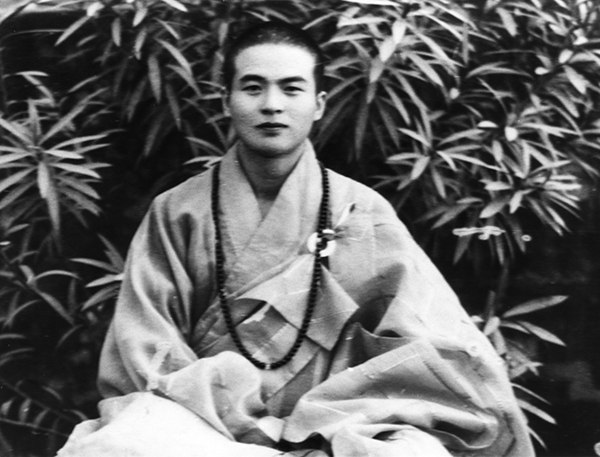
In the early days of Buddhism, how did monastics observe the Way and live their lives? As the daily lives of these monastics were not one of material things, emotional ties, or sensory pleasures, they led a lives of few material things and cool emotional ties. The world within their heart was pure and their spiritual life was forever lasting. In more concrete terms, their Read more
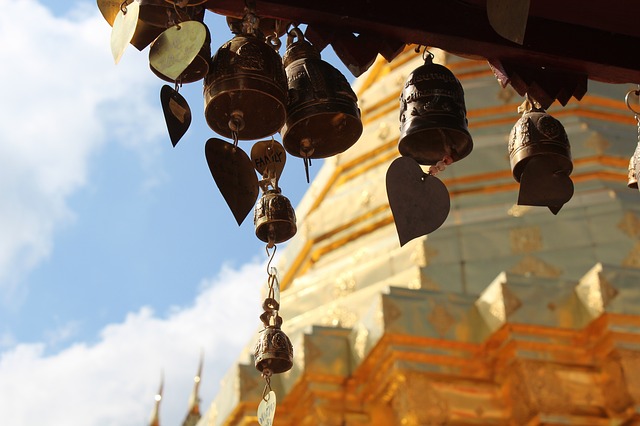
It is only through loving-kindness and compassion that we can find room in our hearts to forgive others. It is only through our willingness to let go of resentment that we can find a way to magnanimity. Read more

Sages from all religions who serve the multitudes without any monetary reward or recognition are volunteers of human society. An ancient sage once said: “Before one can become a prominent figure in Buddhist circles, one has to be a horse and an ox for all sentient beings.” Another said: “Before one attains Buddhahood, one first has to form affinity.” Over the generations, Buddhist monastics have Read more