


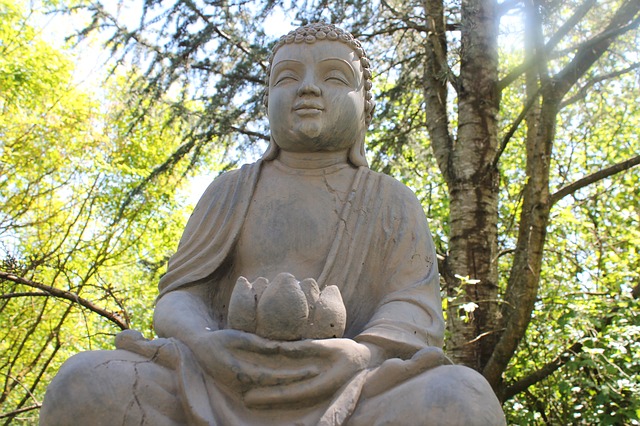


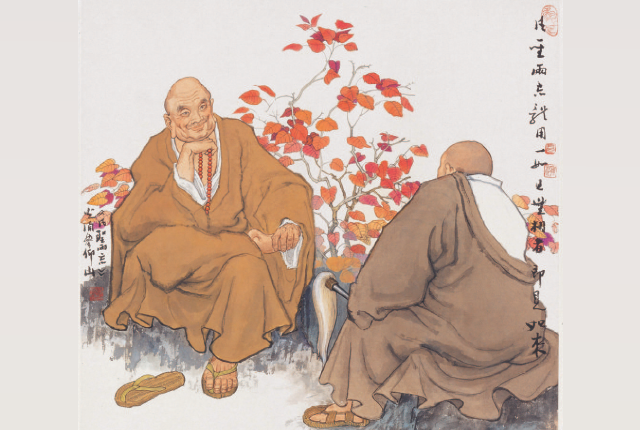

Humans are thinking animals! Since the beginning of time, there have always been people who fantasize, who have delusions, who dream—and many who have ideals. When we lie in our beds at night, we should be free from worry. Yet thoughts about our lives often arise then; thoughts about family, country, or even the world. Everything is within our minds.The average person often tends to Read more
All religions have their rules and precepts that must be followed. The Buddhist precepts are special because they are mostly concerned with the cultivation of morality. We can only attain inner wisdom and realize the highest levels of truth after we are good and moral people. For a Buddhist, the only way to truly respect the Buddha is by perfecting his or her human character. Read more
Control of the body means that we know when to act, and when not to act and that we know how to behave with moderation. Read more

Look at the beauty of nature: the crystal blue sky, the floating white clouds, the colorful hues of a rainbow after it rains, and the twinkling stars at night. Go climb to the top of a mountain at night, when the moon is bright and the air is crisp, and as far as the eye can see, you can appreciate the panoramic beauty of nature Read more

The Buddha often explained emptiness and impermanence by getting people to think about how phenomena arise, change, and decline. Read more

Harmony and beauty within our lives and within our communities often fail due to our insistence on the duality of self and others. When we maintain the duality of self and others, we develop disproportionate levels of love and hatred, attraction and repulsion for other people, which throws our relationships out of balance; the capacity for affinity becomes dormant. We judge everyone around us, putting Read more
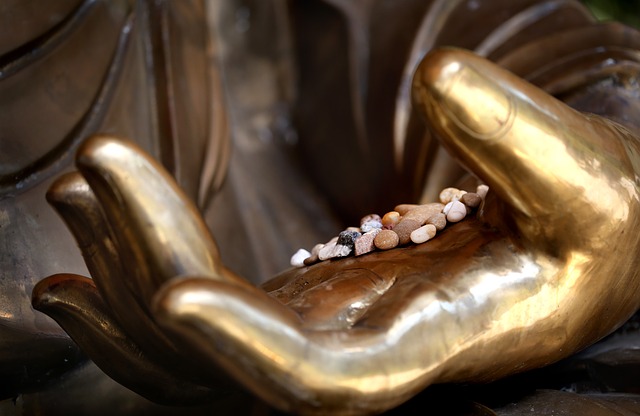
Greed narrows our vision as it obscures the wealth of wisdom contained in our inherent Buddha nature. Greed is always based on false premises, it always makes us more foolish and it never produces good results unless it teaches us at last to get control of ourselves. Greed leads us toward danger even as we think we are moving in a direction that will benefit Read more

The great masters of the Chan School have always been like leisurely clouds and wild cranes, sometimes dwelling in the mountain forests, sometimes living by the water. With three robes and one mat, they follow their conditions and let things follow their own course. Even when their Dharma conditions are remarkable or they are among royalty, they are not tempted by material gain or moved Read more
Meditation is not about sitting quietly with your eyes closed—this is just one method for developing meditative concentration. What matters in meditation is being able to contemplate and focus the mind. To practice meditation, one must focus on the present moment, stop delusion, and see the mind. In China, the Chan School encouraged the development of meditative concentration through communal labor, like carrying firewood and Read more
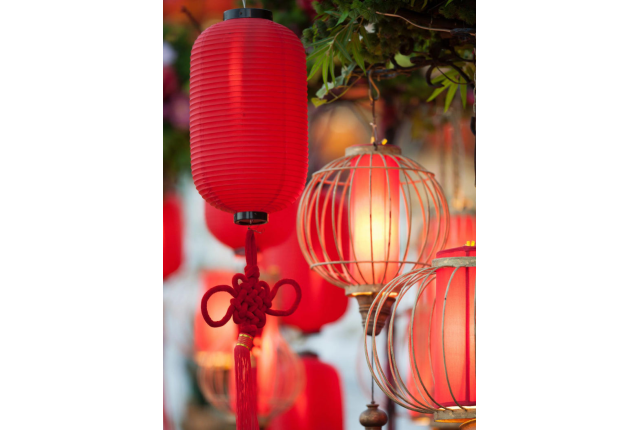
Offering lamps at Buddhist temples and stupas is a common practice. The Flower Adornment Sutra says, "The lamp of wisdom can break through all forms of darkness." As such, lamps represent the light of wisdom that pierces through the darkness of ignorance. This empowers sentient beings encumbered by confusion. The Buddhist practice of offering lamps originates from the actions of a poor girl named Nanda. Read more
The Sumati Sutra discusses fulfilling both worldly and supramundane needs. Sumati’s first three questions are regarding obtaining an elegant appearance, obtaining wealth, and keeping a harmonious family life—all of these are concerned with success in this life. Being satisfied in this way ensures that a bodhisattva will not be hindered, and can freely walk the bodhisattva path.Rewards and blessings are not stolen, forcibly taken, or Read more

Why should people create Buddha images? Did the Buddha really want everyone to make images of him and worship his body?In truth, the purpose of creating the Buddha images is not to create symbols for worship. Buddha images are reminders that “the mind is the Buddha,” and that everyone has Buddha nature. Buddha images also remind us to frequently recollect the virtues of the Buddha Read more